
How to Source Seasonal Home Décor for Retail: A B2B Buying Guide
Seasonal home décor gives retailers an opportunity to refresh their assortments throughout the year, create timely displays, and respond to changing consumer preferences. From Christmas and Halloween to Easter, fall, spring, and Valentine’s Day, each season brings different colors, materials, themes, and merchandising opportunities.
For importers, wholesalers, retailers, distributors, and online sellers, however, seasonal decoration sourcing involves much more than choosing attractive products.
A successful seasonal collection requires careful planning across product categories, colors, materials, price positioning, packaging, shipping, and retail application.
This guide explains several practical factors B2B buyers should consider when sourcing seasonal home décor for retail markets.
Why Seasonal Home Décor Requires Careful Planning
Seasonal products are different from many year-round home décor categories because they usually have a defined selling period.
Retailers often need to make sourcing decisions months before the products reach store shelves or online marketplaces. Production schedules, international transportation, warehouse preparation, photography, merchandising, and promotion all need to be considered before the selling season begins.
This makes assortment planning especially important.
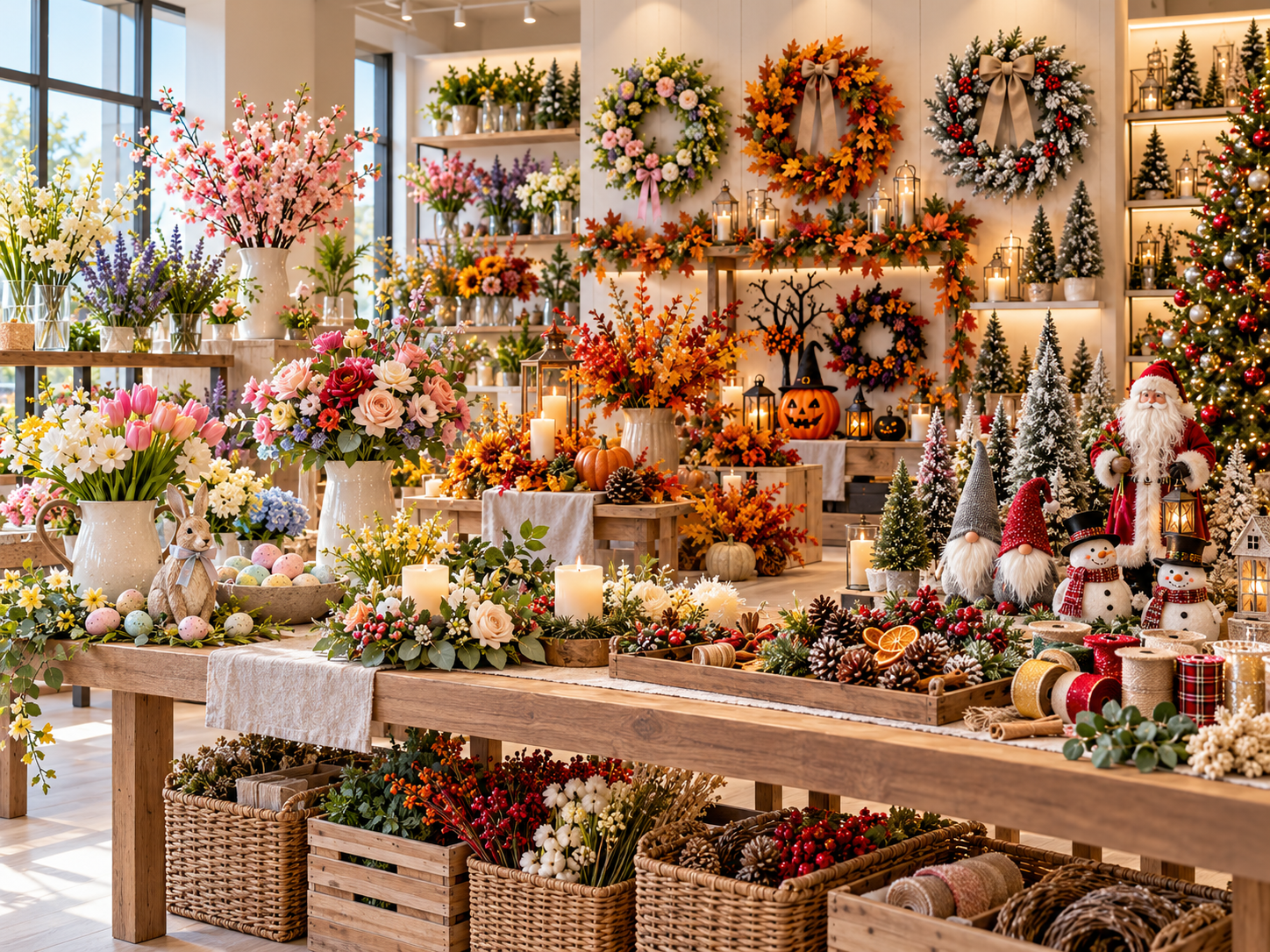
A strong seasonal collection is rarely built around a single product. Retailers often combine several related categories to create a consistent visual direction.
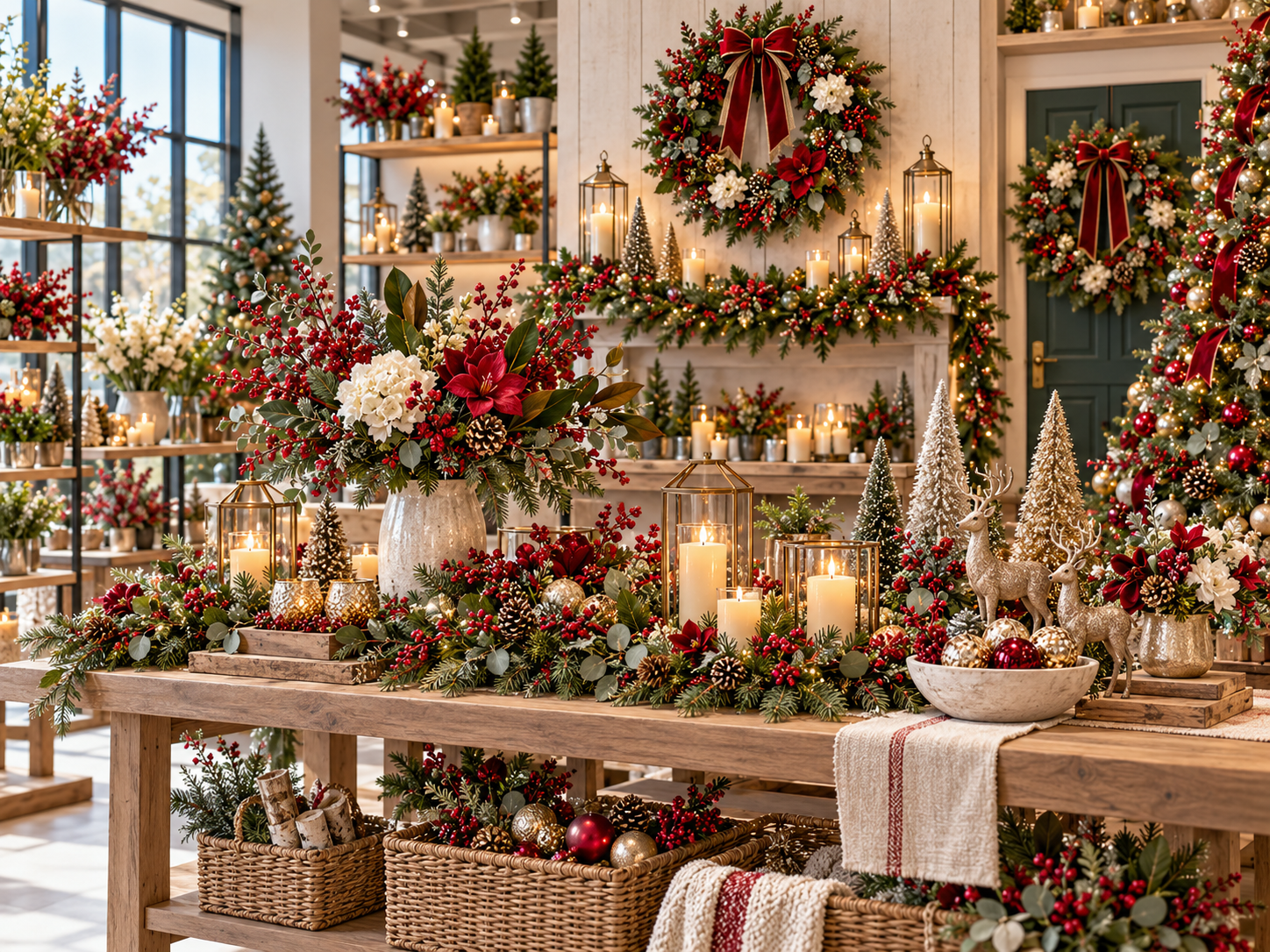
For example, a Christmas assortment may include wreaths, garlands, floral stems, Christmas trees, candle rings, door decorations, tabletop décor, Santa decorations, snowmen, and gnomes.
A fall collection may combine artificial flowers, wreaths, foliage, branches, pumpkins, candle rings, and warm-toned decorative accents.
The objective is not simply to increase the number of products. Each item should contribute to a recognizable seasonal collection.
Start With the Target Customer and Retail Channel
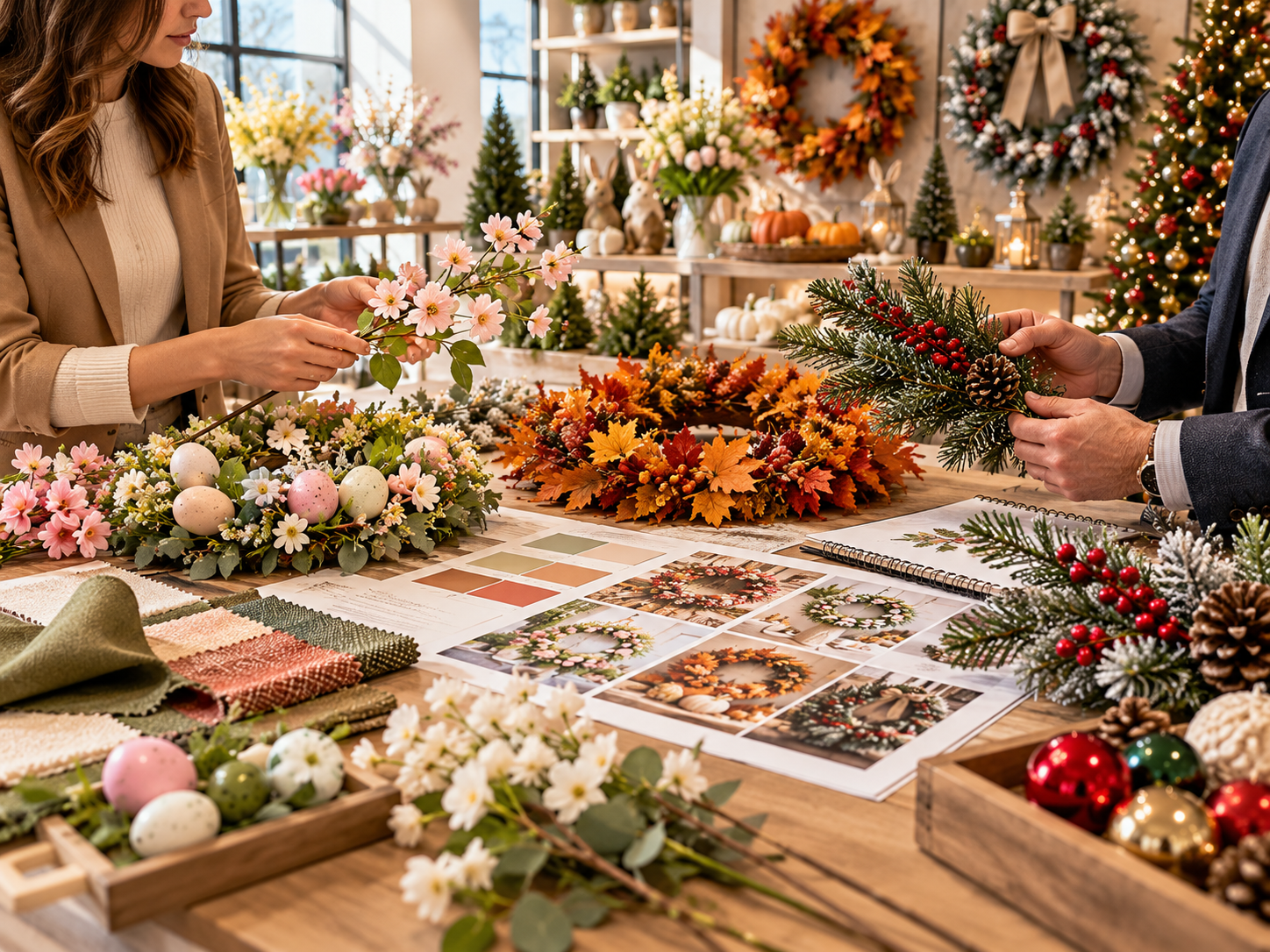
Before selecting individual products, buyers should first define who the collection is designed for and where it will be sold.
Different retail channels may require very different product strategies.
A large chain retailer may need a broad assortment covering several price levels. A gift store may focus on smaller decorative pieces with distinctive details. A home décor retailer may place greater emphasis on coordinated collections, while an online seller may pay more attention to packaging efficiency, product photography, and shipping volume.
Buyers should consider several questions before building the assortment:
- Who is the target consumer?
- Which seasonal theme is the collection designed for?
- Where will the products be sold?
- What retail price range is required?
- Which products will act as visual highlights?
- Which products will support the broader collection?
Answering these questions early can make product selection more focused and reduce the risk of creating an assortment made up of unrelated items.
Build a Coordinated Seasonal Product Mix
One of the most effective approaches to seasonal décor sourcing is to think in collections rather than individual SKUs.
A collection can begin with a clear color palette, material direction, botanical theme, character concept, decorating style, or target price range.
Once the main direction is established, buyers can select related products around it.
For example, berries used in a wreath may also appear in garlands or decorative stems. Artificial flowers can coordinate with candle rings or tabletop arrangements. The same foliage, ribbon, texture, or color treatment can appear across several products.
This creates visual consistency and allows retailers to merchandise different categories together.
It also gives buyers greater flexibility.
A customer who may not purchase a large wreath could still choose a smaller floral decoration or candle ring from the same collection. Coordinated assortments therefore make it possible to offer different product formats while maintaining a common seasonal identity.
What Buyers Should Check Before Ordering
Product appearance is important, but professional seasonal decoration sourcing also requires attention to details that may not be fully visible in product photos.
Product Construction
Buyers should review how flowers, leaves, branches, fabrics, ornaments, and decorative components are assembled.
Products should be suitable for normal handling during packing, transportation, unpacking, retail display, and consumer use.
Color Consistency
Color is particularly important in seasonal collections.
If several products are designed to appear together, noticeable differences in color can weaken the overall presentation.
Samples can help buyers compare materials and colors under real lighting conditions before confirming larger orders.
Size and Proportion
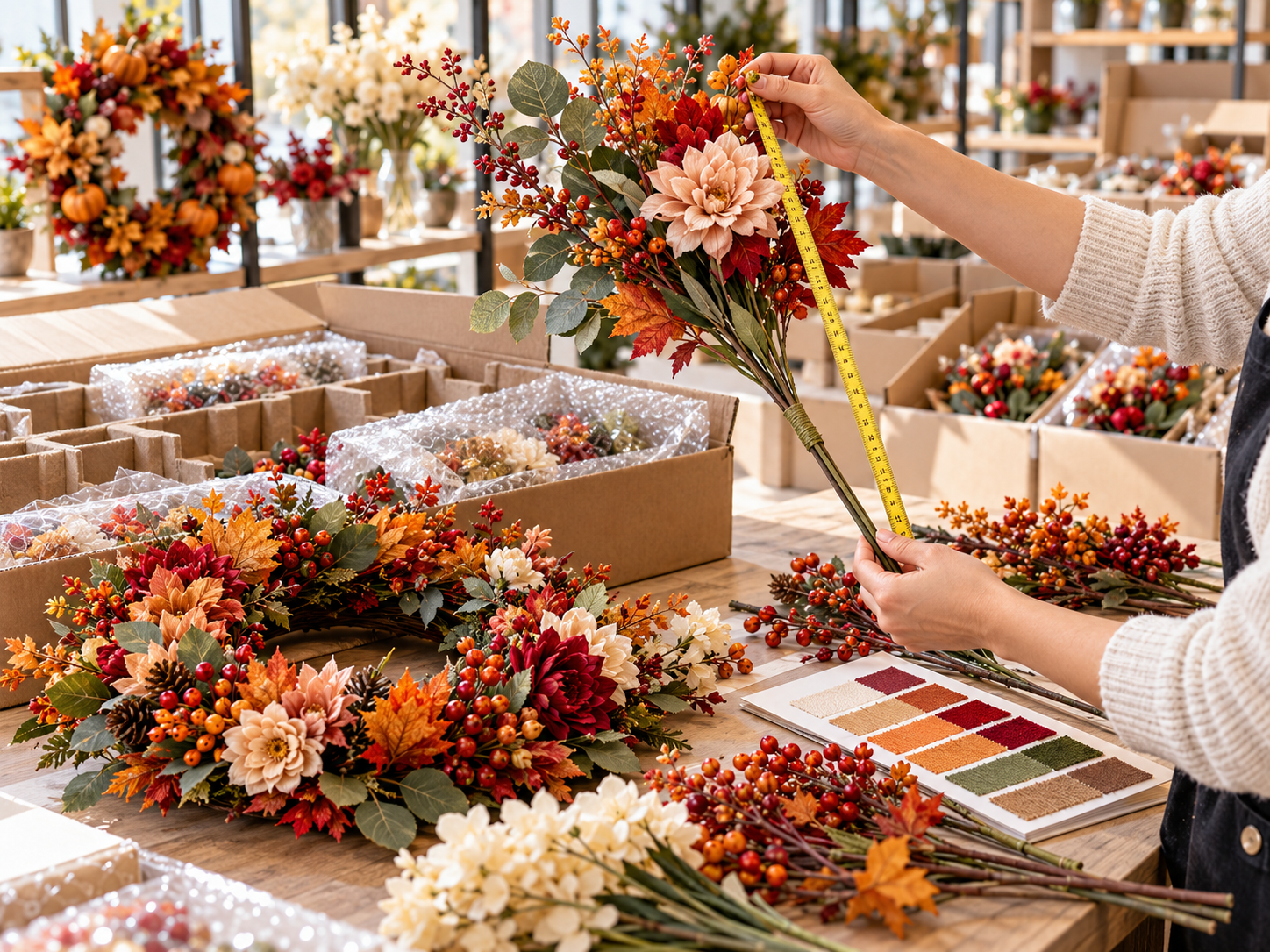
Measurements should always be reviewed carefully.
A product may look balanced in a close-up photograph but appear very different in a store display.
For floral and seasonal products, buyers may need to consider flower diameter, stem length, wreath size, branch length, product height, and overall volume.
Packaging and Shipping
Many seasonal decorations are lightweight but occupy significant space.
Wreaths, floral stems, branches, shaped decorations, and other products may require packaging that protects the product while also using carton space efficiently.
Packaging should therefore be considered during product selection rather than after the assortment has been finalized.
Plan Seasonal Collections Around Retail Use
A good product does not automatically become a good retail product.
Buyers should also think about how the item will be displayed, photographed, sold, and combined with other products.
For physical stores, visual impact and collection coordination may be particularly important.
For e-commerce, buyers may also need to consider whether the product can be clearly understood from photographs, whether packaging is suitable for individual shipment, and whether the product dimensions affect logistics costs.
Products can also play different roles within the same collection.
Larger wreaths, decorative trees, or statement pieces may attract attention, while floral stems, candle rings, or smaller tabletop decorations can provide additional price points.
Planning these roles in advance can help create a more balanced retail assortment.
Choosing a Seasonal Home Décor Supplier
Seasonal sourcing can place different demands on suppliers compared with year-round product categories.
B2B buyers should consider whether a supplier can support the type of collection they are developing.
Important factors may include product category coverage, sample communication, seasonal development experience, packaging discussions, product coordination, and the ability to understand specific design directions.
Clear communication is especially important.
Seasonal products often involve specific colors, materials, sizes, and visual themes. Discussing these details during product selection and sample review can help reduce misunderstandings later in the sourcing process.
For buyers developing several related categories, working with a supplier that understands collection-based sourcing can also make product planning more efficient.
How Transworld Supports Seasonal Decoration Sourcing
Transworld (Anshan) Inc. supplies a range of home and seasonal decoration products for overseas markets.
Our product categories include artificial flowers, wreaths, garlands, floral stems, door decorations, candle rings, Christmas decorations, fall decorations, Easter decorations, Halloween decorations, gnomes, snowmen, Santa decorations, and DIY floral decoration products.
This range allows sourcing discussions to extend beyond a single product.
For example, buyers developing Christmas, fall, Easter, or other seasonal programs can consider multiple related categories while working toward a more consistent visual direction.
Artificial floral products and botanical elements can also be coordinated with wreaths, garlands, door decorations, candle rings, and other seasonal items.
Rather than treating every product as an isolated sourcing project, buyers can discuss broader requirements such as collection themes, product combinations, applications, and target retail positioning.
A More Practical Approach to Seasonal Sourcing
Successful seasonal home décor sourcing is not simply about finding attractive products.
Buyers need to consider how products work together, how they fit the intended retail environment, how they will be packed and transported, and whether the overall assortment reflects a clear seasonal concept.
Starting with the customer, retail channel, seasonal theme, and collection structure can make sourcing decisions more focused.
It can also help retailers create assortments that feel connected rather than assembled from unrelated individual products.
For buyers planning upcoming Christmas, fall, Halloween, Easter, spring, Valentine’s Day, or other seasonal collections, evaluating related product categories together can be a practical first step toward building a more coordinated retail program.
Planning Your Next Seasonal Décor Collection?
Explore Transworld’s home and seasonal decoration categories or contact us to discuss your upcoming sourcing requirements.