
Artificial Spring Wreaths Wholesale: A Retail Buyer’s Checklist
Spring wreaths offer retailers a versatile way to refresh their seasonal home décor collections. From floral designs and natural-looking greenery to Easter-themed decorations, artificial wreaths can suit a variety of retail environments and consumer preferences.
For importers, wholesalers, and retail buyers, however, selecting artificial spring wreaths involves more than comparing product photos and prices.
Wreath size, material quality, construction, packaging, and retail positioning can all affect how a product performs once it reaches the market.
This guide outlines the key details buyers should review when sourcing artificial spring wreaths wholesale, helping them make more informed product decisions and prepare collections for upcoming retail seasons.
1. Choosing Between Spring and Easter Wreath Designs
One of the first decisions buyers should make is whether their collection will focus on Easter, the broader spring season, or a combination of both.
Although these products may share similar materials and colors, they can serve different retail purposes.
Floral Spring Wreaths
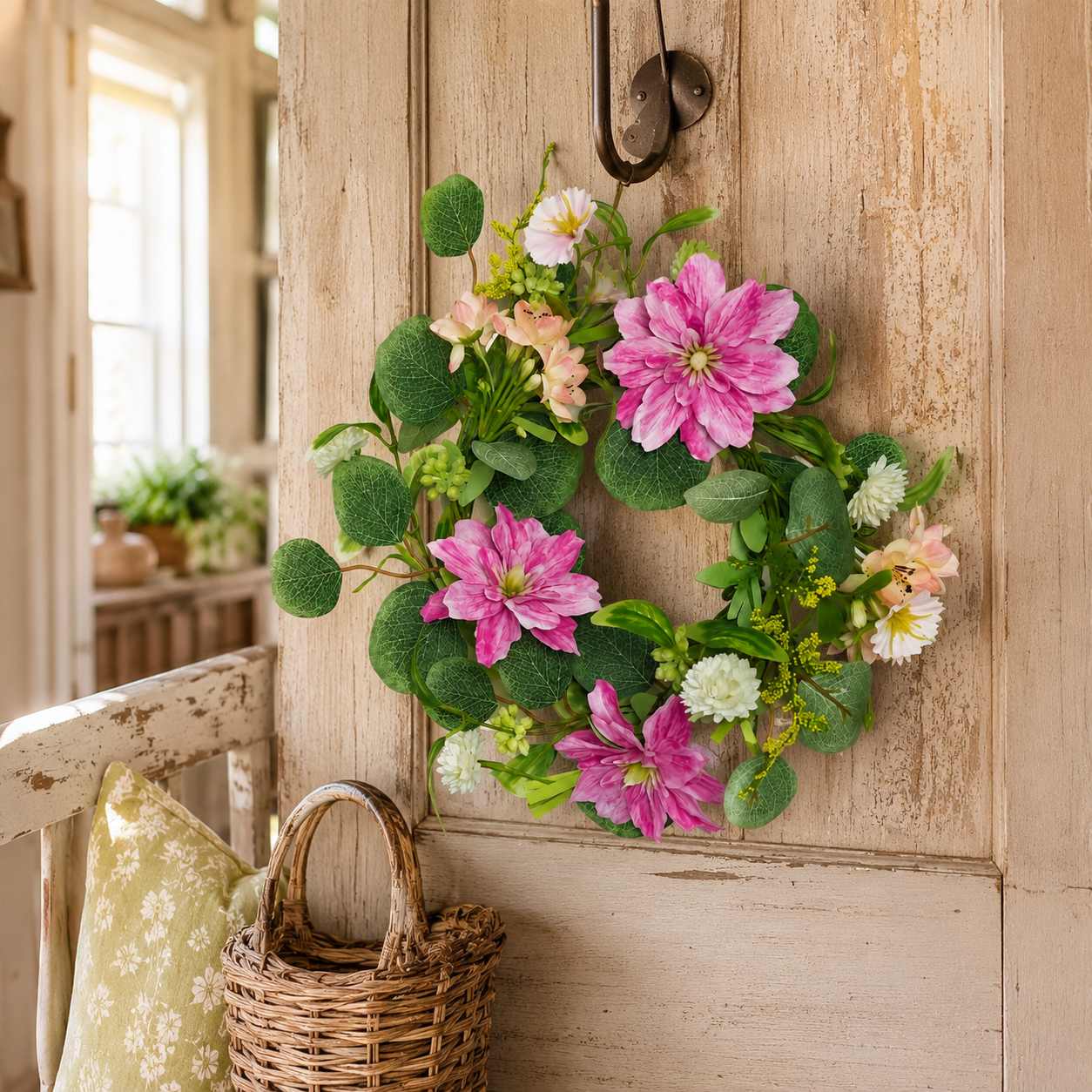
Floral wreaths featuring artificial flowers, leaves, and botanical accents can be used for everyday spring decoration. Depending on the design, they may remain suitable for retail displays beyond a specific holiday.
These products can appeal to home décor stores, garden centers, gift retailers, and other businesses offering seasonal decorative accessories.
Greenery-Based Wreaths
Artificial greenery wreaths offer a more botanical appearance. Designs featuring leaves, branches, and subtle floral details can complement different interior decorating styles.
They may also provide retailers with flexible display options when creating collections that are not tied to a particular holiday.
Easter-Themed Wreaths
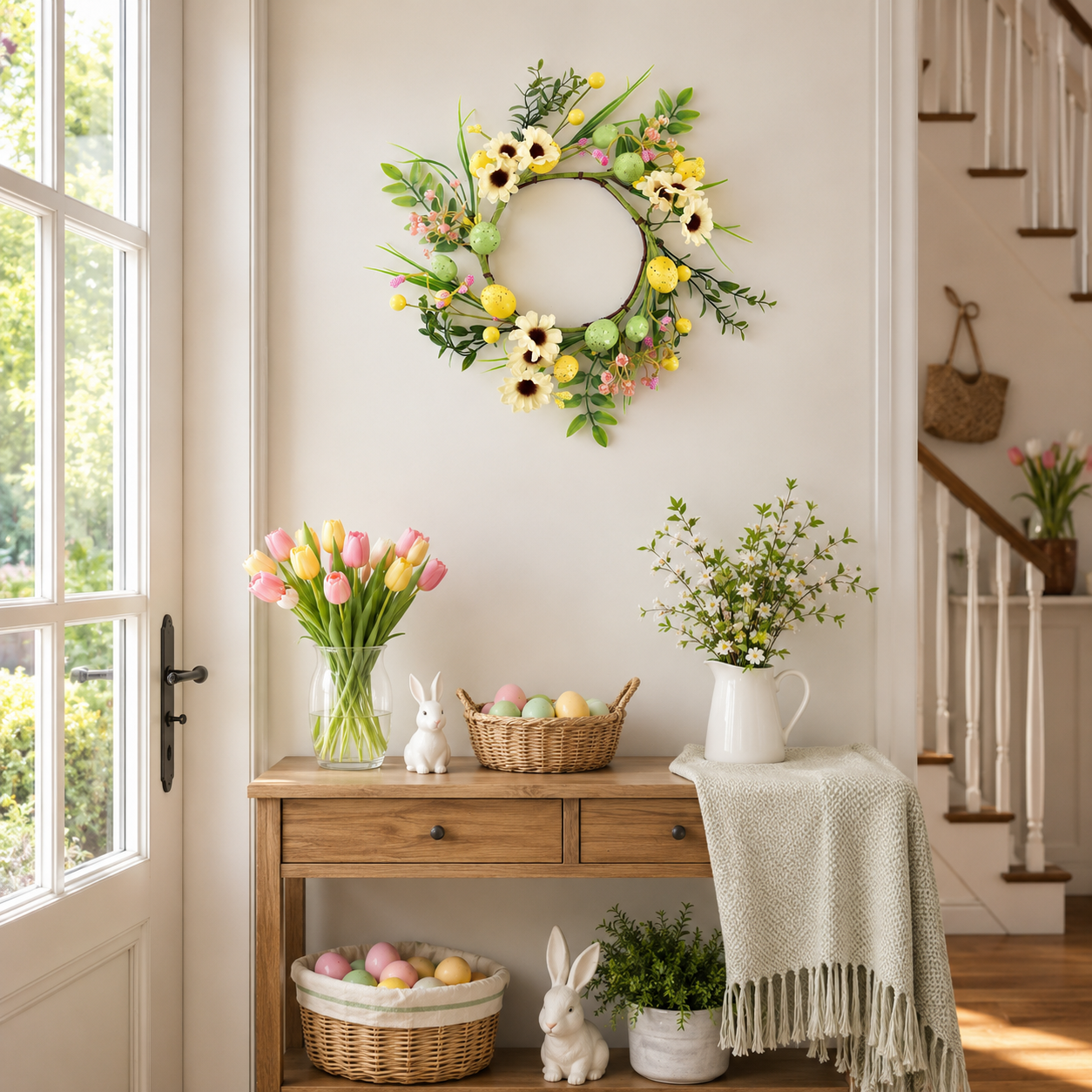
Easter wreaths may feature decorative eggs, ribbons, spring flowers, and other recognizable holiday elements.
Their seasonal identity can make them suitable for Easter promotions, but buyers should carefully consider the intended selling period and inventory requirements.
For retailers, combining holiday-specific designs with more versatile spring wreaths can create a balanced assortment for different customer preferences.
2. What Materials Should Buyers Consider?
Material selection influences the appearance, texture, flexibility, and construction of an artificial wreath.
Different wreath designs may use fabric flowers, plastic foliage, metal wire, decorative branches, and other components.
When reviewing samples, buyers should consider several practical details.
Flower and Leaf Appearance
Artificial flowers should be assessed for petal shape, surface texture, color consistency, and overall appearance.
Some designs prioritize a natural botanical look, while others use more decorative finishes. The appropriate choice depends on the target retail market and product positioning.
Structural Support
Wreath frames and supporting branches affect the overall shape and stability of the product.
Buyers should examine whether the structure maintains its intended form during normal handling and whether decorative elements are securely attached.
Material Consistency
When ordering multiple wreath styles as one collection, consistency in color, texture, and decorative finishes is particularly important.
Small differences may be less noticeable in individual product photographs but become more apparent when products are displayed together.
Reviewing physical samples can help buyers identify these details before confirming larger orders.
3. Five Quality Checks Before Placing a Bulk Order
Product photographs are useful for initial selection, but they cannot show every aspect of construction quality.
Before confirming a wholesale order, buyers should review the following five areas.
1. Overall Shape and Fullness
Examine the wreath from the front and side.
Check whether the floral elements are distributed evenly, whether the intended circular shape is maintained, and whether the underlying frame is excessively visible.
2. Product Dimensions
Confirm the overall outer diameter, depth, and any other dimensions relevant to display or packaging.
Two wreaths with similar diameters may have noticeably different visual profiles because of variations in foliage density and decorative volume.
3. Attachment Strength
Review how flowers, leaves, branches, and decorative accessories are connected to the wreath base.
Components should remain secure during ordinary packing, unpacking, and retail handling.
4. Color and Finish
Compare samples under appropriate lighting conditions.
For coordinated collections, evaluate whether different products maintain the intended color palette and material appearance.
5. Appearance After Unpacking
Some artificial wreaths may require reshaping after transportation.
Buyers should examine how the product looks immediately after unpacking, whether its decorative elements can be adjusted easily, and how closely the final appearance matches the approved sample.
These checks provide a more practical basis for product evaluation than catalog photographs alone.
4. Packaging Matters for Wholesale Artificial Wreaths
Artificial wreaths can present packaging challenges because their decorative volume may be relatively large compared with their weight.
Flowers, foliage, and ornaments may also require protection against compression or displacement during transportation.
For wholesale orders, buyers should discuss packaging requirements early in the sourcing process.
Important questions include:
- How many wreaths will be packed in each carton?
- What are the carton dimensions and total shipping volume?
- How will flowers and decorative accessories be protected?
- Will the wreath require reshaping after unpacking?
- Are retail labels, barcodes, hangtags, or customized packaging needed?
Packaging choices should balance product protection, shipping efficiency, and the requirements of the intended retail channel.
For e-commerce sellers, individual delivery conditions may also need to be considered.
Where possible, reviewing a packed sample can help buyers assess whether the proposed packaging is suitable before mass production.
5. Building a Practical Spring Wreath Assortment
A spring wreath collection does not need to include a large number of unrelated designs.
Instead, buyers can focus on a smaller selection that serves different purposes.
For example, a retail assortment might include a fuller floral wreath as a display highlight, a simpler greenery wreath for everyday decorating, and an Easter-themed design for holiday promotion.
Different sizes, decorative densities, and material combinations can also support different retail price positions.
Buyers should consider the following questions:
- Which designs fit the target customer’s decorating preferences?
- Which products are intended for everyday spring display?
- Which styles are specifically designed for Easter?
- Are different sizes or price levels needed?
- Can the wreaths be coordinated with other seasonal decorations?
Matching wreaths with artificial floral stems, garlands, decorative branches, or tabletop arrangements can help retailers create a more consistent product presentation.
However, product combinations should be selected according to actual retail demand rather than simply increasing the number of available items.
6. What Information Should Buyers Send to a Supplier?
Clear product requirements can make wholesale sourcing discussions more efficient.
Before requesting a quotation or arranging samples, buyers should prepare the following information:
- Target market and retail channel
- Preferred wreath styles or reference images
- Approximate product dimensions
- Material and color preferences
- Estimated order quantity
- Packaging and labeling requirements
- Required delivery schedule
Not every detail needs to be finalized at the beginning.
However, sharing the main requirements helps suppliers evaluate suitable products, discuss potential adjustments, and clarify the details needed before quotation and sample approval.
Minimum order quantities, available customization options, production schedules, and packaging arrangements should be confirmed for each specific project.
7. How Transworld Supports Seasonal Floral Sourcing
Founded in 2004, Transworld (Anshan) Inc. supplies artificial floral products and seasonal home decorations to international markets.
Our product categories include artificial flowers, wreaths, garlands, floral stems, decorative branches, door decorations, and a wide range of seasonal decorative accessories.
Through our manufacturing and sourcing network, we support buyers with product selection, development discussions, sampling, and supply coordination across different decorative categories.
For customers planning spring and Easter collections, this means that wreath sourcing can be considered alongside related floral and decorative products.
Buyers can discuss product styles, materials, dimensions, packaging requirements, and collection coordination according to their retail needs.
Our focus is to help international customers develop practical seasonal decoration assortments while keeping product requirements and sourcing expectations clear throughout the process.
8. Planning Your Next Spring Decoration Collection?
Choosing the right artificial spring wreaths requires attention to product design, construction, materials, packaging, and retail application.
For wholesale buyers, careful sample review and clear communication with suppliers can help reduce uncertainty before placing larger orders.
Whether you are sourcing floral spring wreaths, Easter decorations, or coordinated seasonal floral collections, selecting products around your target market and retail requirements is an important first step.
Looking for artificial spring wreaths or other seasonal floral decorations?
Explore Transworld’s product collections or contact our team to discuss your preferred designs, estimated quantities, customization requirements, and upcoming sourcing plans.